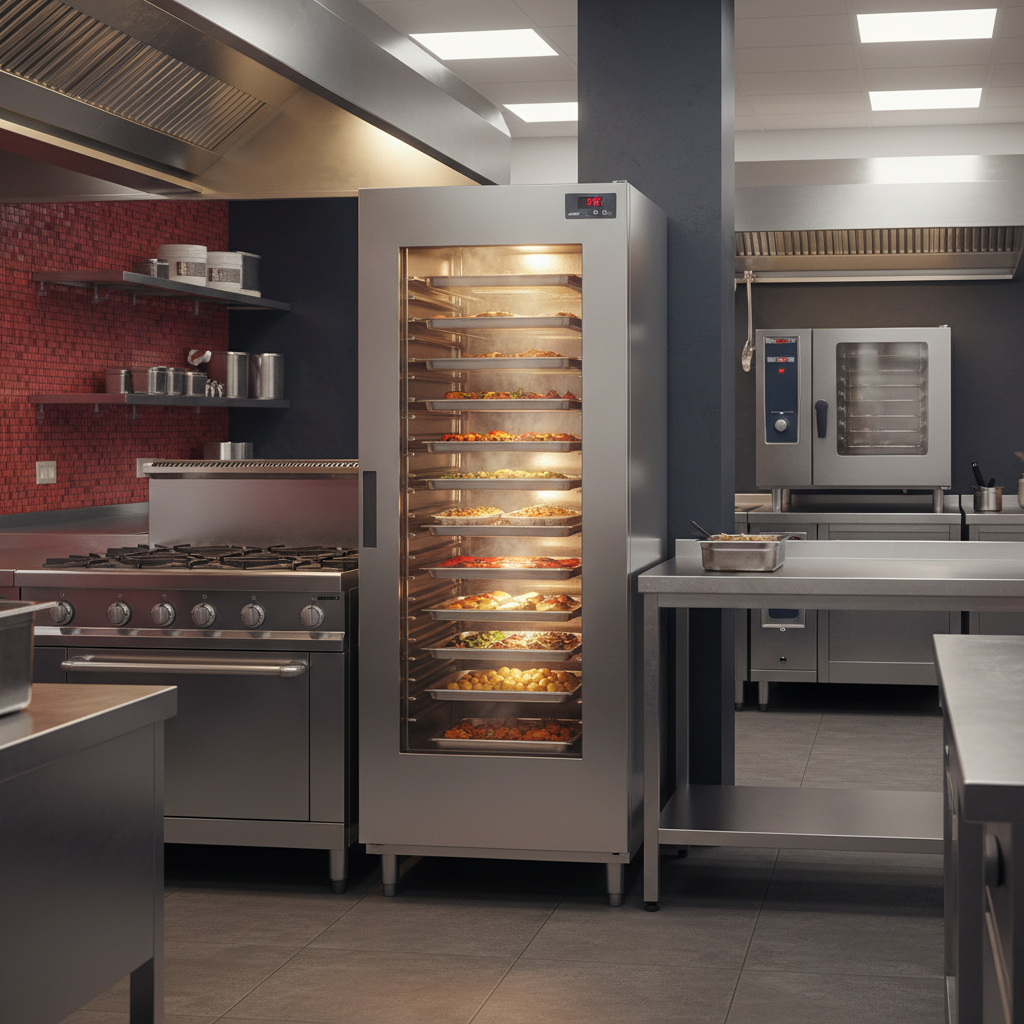
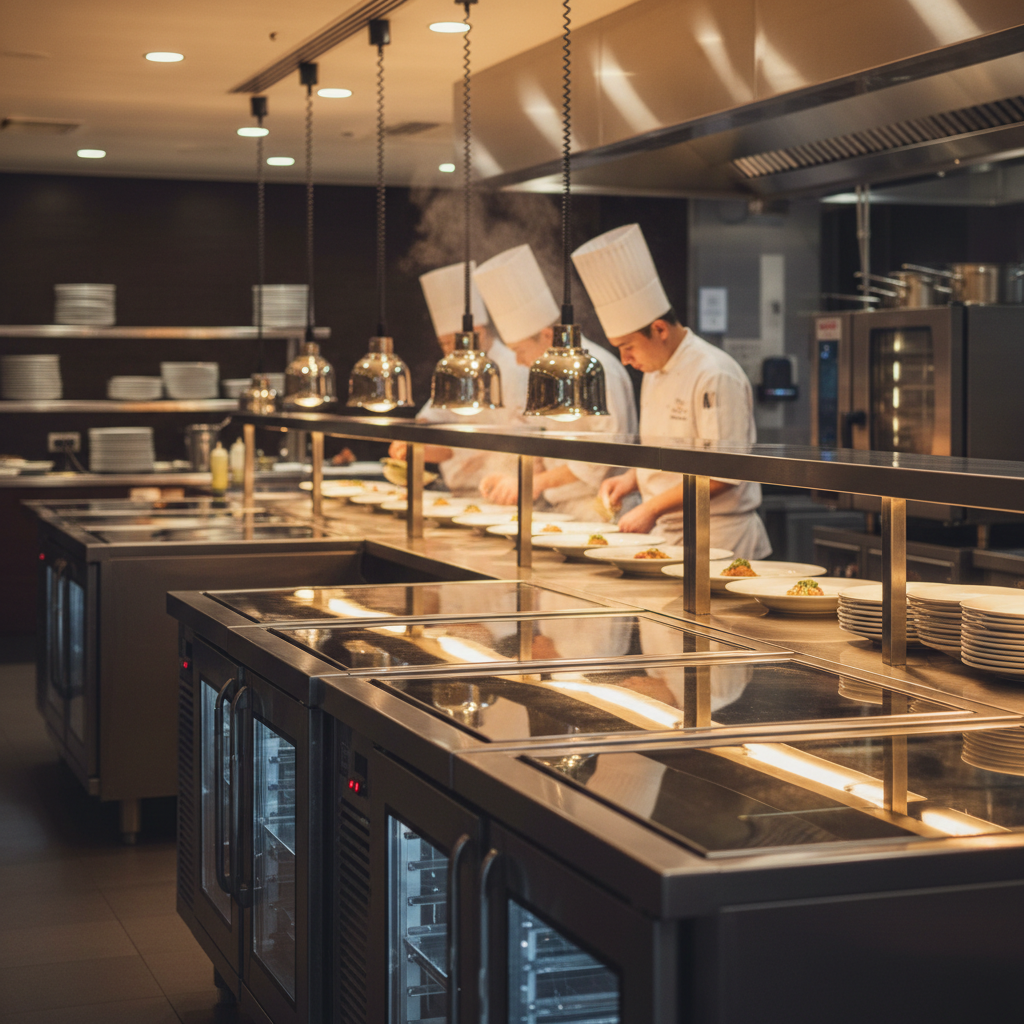
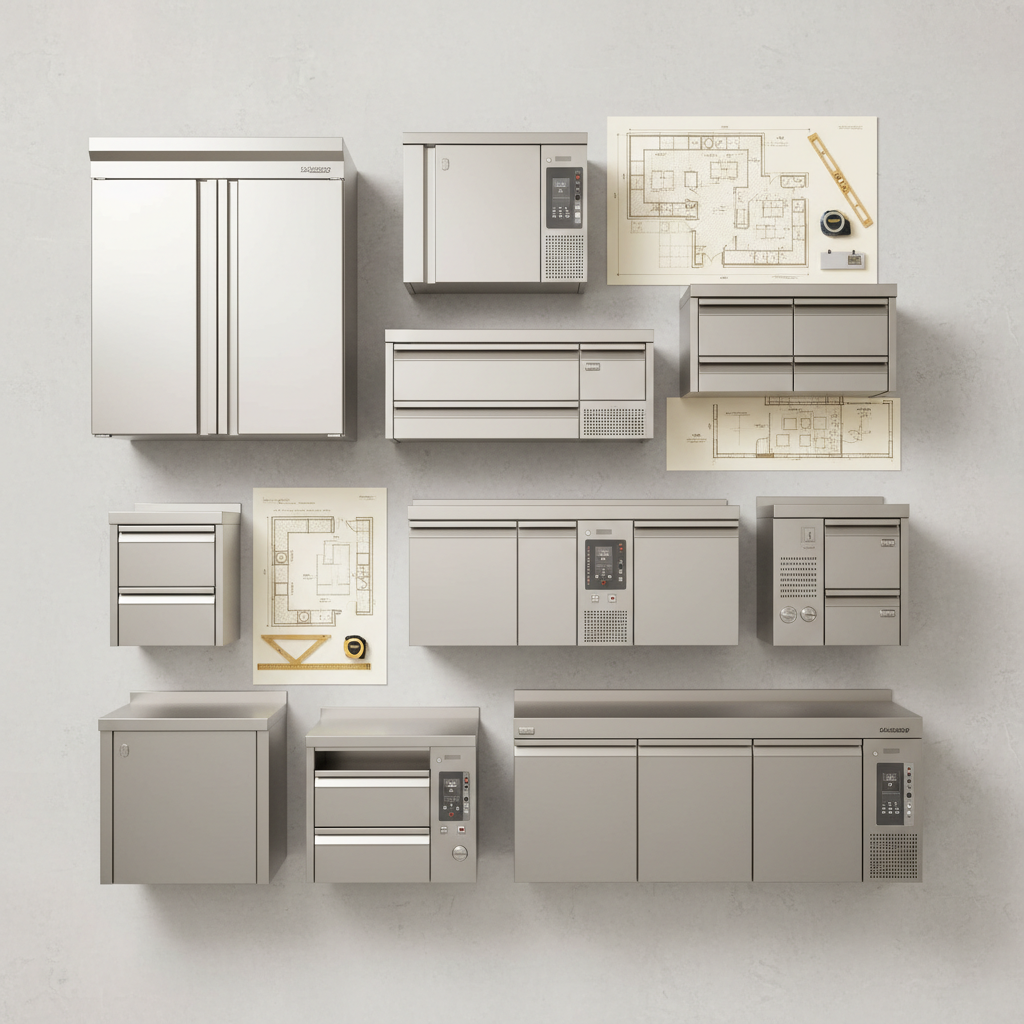
Stainless steel commercial heated holding cabinets lined up in a professional foodservice kitchen
Held Hot. Held Fresh. Ready To Serve.

Holding Cabinets for Every Kitchen and Service Line

Commercial heated holding cabinets for restaurants, catering operations, banquet halls, and institutional kitchens. Precise temperature and humidity control that keeps food at safe serving temp without drying it out, from single-rack models to full-height mobile units.

  • Heated dry-heat and heated-and-humidified holding
  • Full-height, half-height, mobile and stationary units
  • Cook-and-hold and proofing cabinets covered too
  • Capacity, temperature, insulation and controls explained

The fundamentals

What a holding cabinet does

A holding cabinet has one job: keep food that is already cooked at a safe serving temperature until it goes out. Cooked food left on a counter falls into the food-safety danger zone, generally 40°F to 140°F (4°C to 60°C), where bacteria multiply. A holding cabinet keeps the product above that zone, hour after hour, so the kitchen can cook ahead of the rush and still serve safely.

Temperature alone is not the whole story. Hold food in dry heat long enough and it dries out, skins over and toughens. That is why better cabinets add humidity control: moisture in the cabinet keeps roasts, vegetables, rice and plated meals from drying while they wait. The trade-off is that moisture softens crisp foods, which is why the two styles exist side by side.

So there are two broad families. Heated cabinets hold with dry heat, ideal for fried and crisp items. Heated and humidified cabinets add moisture for everything that would otherwise dry out. Adjustable units cover both by letting you dial the humidity to the menu.

A holding cabinet is not a cook-and-hold oven or a proofing cabinet

A plain holding cabinet only holds already-cooked food. A cook-and-hold cabinet cooks at a low temperature and then drops to a hold, so it finishes the cook as well. A proofing cabinet runs warm, humid and much cooler to rise dough. Same cabinet silhouette, three different jobs, so match the machine to the task.

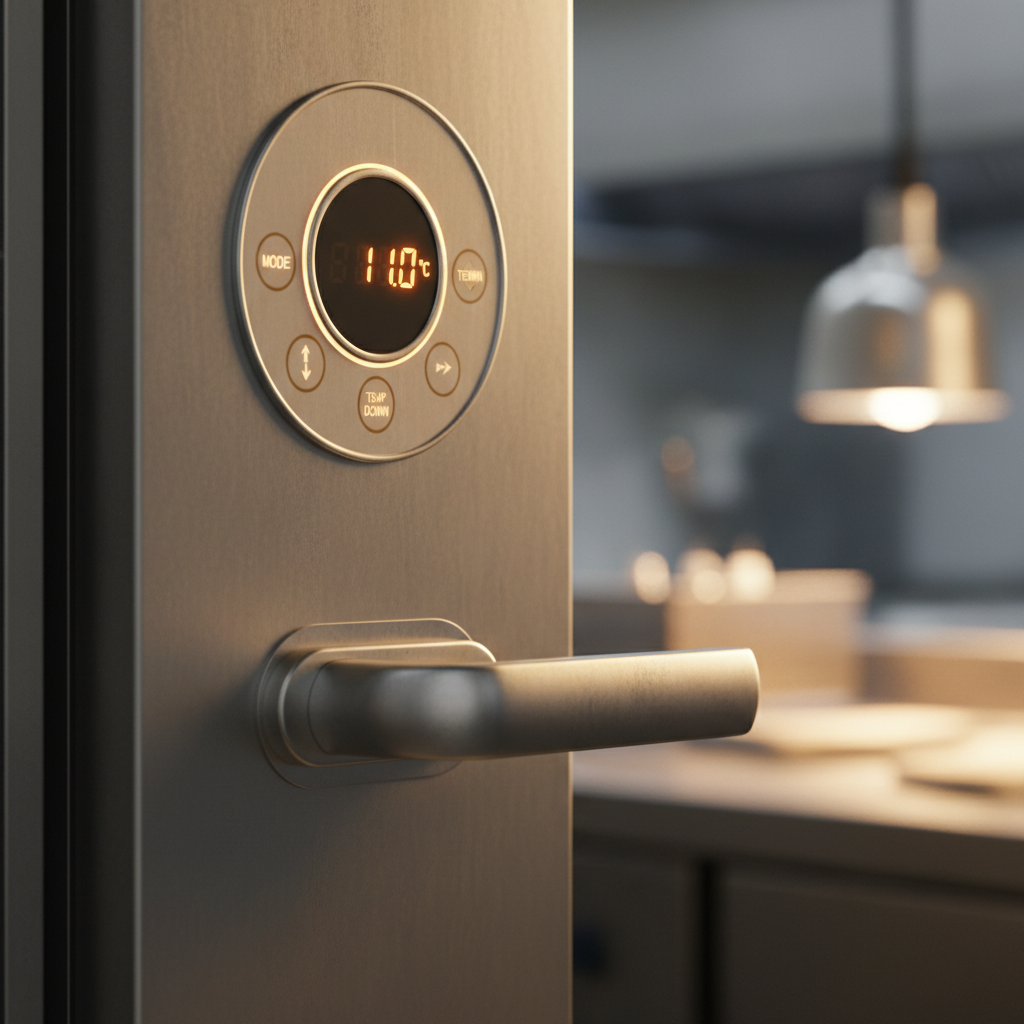
Close-up of a holding cabinet digital control panel showing temperature and humidity settings
Safe serving temp
Holds cooked food above the danger zone so it can be cooked ahead and served safely.
Humidity control
Adds moisture so roasts, rice and plated food do not dry out or skin over on a long hold.
Heated vs humidified
Dry heat protects crisp foods; humidified holding protects moist foods. Adjustable does both.
Holds, does not cook
A standard cabinet keeps hot food hot. Cooking ahead is a cook-and-hold cabinet's job.

Inside the box

How holding cabinets work

A holding cabinet is a simple machine done well: an insulated enclosure, a controlled heat source, a way to add moisture, and air movement to spread both evenly across every pan.

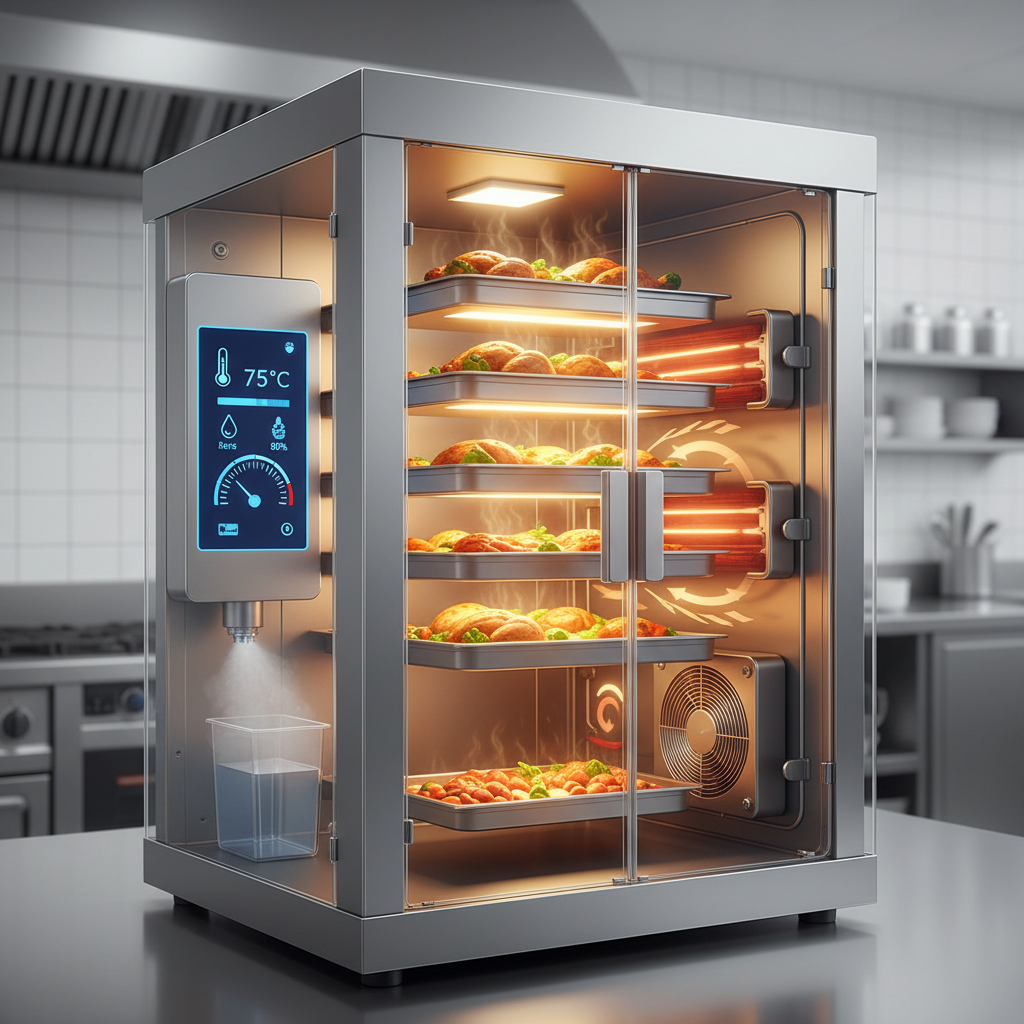
Cutaway view of a holding cabinet interior showing pan slides, heating element and humidity water pan

The shell is an insulated cabinet that traps heat and keeps the outer surface cooler and safer to touch. A thermostatic heating element, controlled by an analog thermostat or a digital controller, warms the interior and cycles to hold a chosen setpoint, usually somewhere in the 140°F to 190°F (60°C to 88°C) band depending on the model and the food.

Humidity comes from one of two routes. Simpler cabinets use a water pan that evaporates into the cabinet; more capable units inject steam and let you set a humidity level. Either way, controlled moisture is what separates a cabinet that holds food beautifully for hours from one that quietly dries it out.

Air is moved two ways. Forced-air cabinets use a fan to circulate heat and moisture for even temperature top to bottom and fast recovery after the door opens. Still-air cabinets are gentler and quieter but hold heat less evenly and recover more slowly. Which you want depends on volume, door traffic and how delicate the food is.

Under it all sits food safety. Holding equipment is part of your HACCP hot-holding controls: hold above the code minimum, check and log temperatures, and treat the cabinet as a critical control point rather than a warm cupboard.

Insulated shell
Traps heat, steadies temperature, and keeps the exterior cooler and safer to handle.
Heating element
A thermostat or digital controller cycles the element to hold the setpoint.
Humidity source
A water pan or injected steam adds moisture so food does not dry or skin over.
Air circulation
Forced-air fans even out heat and recover fast; still-air is gentler but slower.

The lineup

Types of holding cabinets

Four cabinet families cover almost every kitchen. They look alike from the outside; what changes is whether they add moisture, whether they can cook, and what they are tuned to hold.

Heated Holding Cabinets

Dry heat, no added moisture

  • An insulated box with a thermostatic heating element and no humidity source.
  • Keeps crisp and fried foods, breaded items and anything that must stay crunchy from going soggy.
  • The simplest and most economical family, and the default where the menu is dry-textured.
  • Over a long hold, moist foods like roasts and vegetables will dry and skin over in dry heat.

Heated & Humidified Cabinets

Added moisture from water pan or steam

  • Adds controlled moisture, from an evaporating water pan or injected steam, on top of the heat.
  • Holds roasts, vegetables, rice, sauced dishes and plated meals for hours without drying out.
  • Adjustable humidity makes it the versatile pick for mixed menus, banquets and catering.
  • Moisture softens crisp textures, so genuinely crunchy items still prefer dry heat.

Cook-and-Hold Cabinets

Low-temp cook, then automatic hold

  • Cooks at a low temperature and then drops automatically to a holding temperature.
  • Ideal for slow-roasting large cuts, brisket, prime rib, pork, often overnight and unattended.
  • Low-and-slow cooking reduces shrink and frees up oven space during service.
  • This is the one cabinet family that both finishes the cook and holds until it is served.

Proofing & Retarder-Proofer Cabinets

Warm, humid, low temp for dough

  • Holds a warm, humid, much lower-temperature environment, roughly 80°F to 110°F, so yeast dough rises.
  • Retarder-proofers chill dough and then proof it on a schedule for the next service.
  • Standard in bakeries, pizzerias and any kitchen fermenting dough on a timetable.
  • Holding-adjacent rather than hot-holding: a hot cabinet runs far too hot to proof.

Form factor

Full-height or half, mobile or fixed, insulated or not

On top of what a cabinet holds, three form-factor choices decide how it fits your kitchen. Full-height units hold a full rack of pans and stand near floor to ceiling; half-height units hold about half and tuck under a counter or into a tight line.

Mobile cabinets ride on casters and roll from kitchen to venue or transport truck; stationary units stay put. And insulated shells hold steadier, recover faster and cost less to run than non-insulated ones, which are cheaper up front but lose heat every time the door opens.

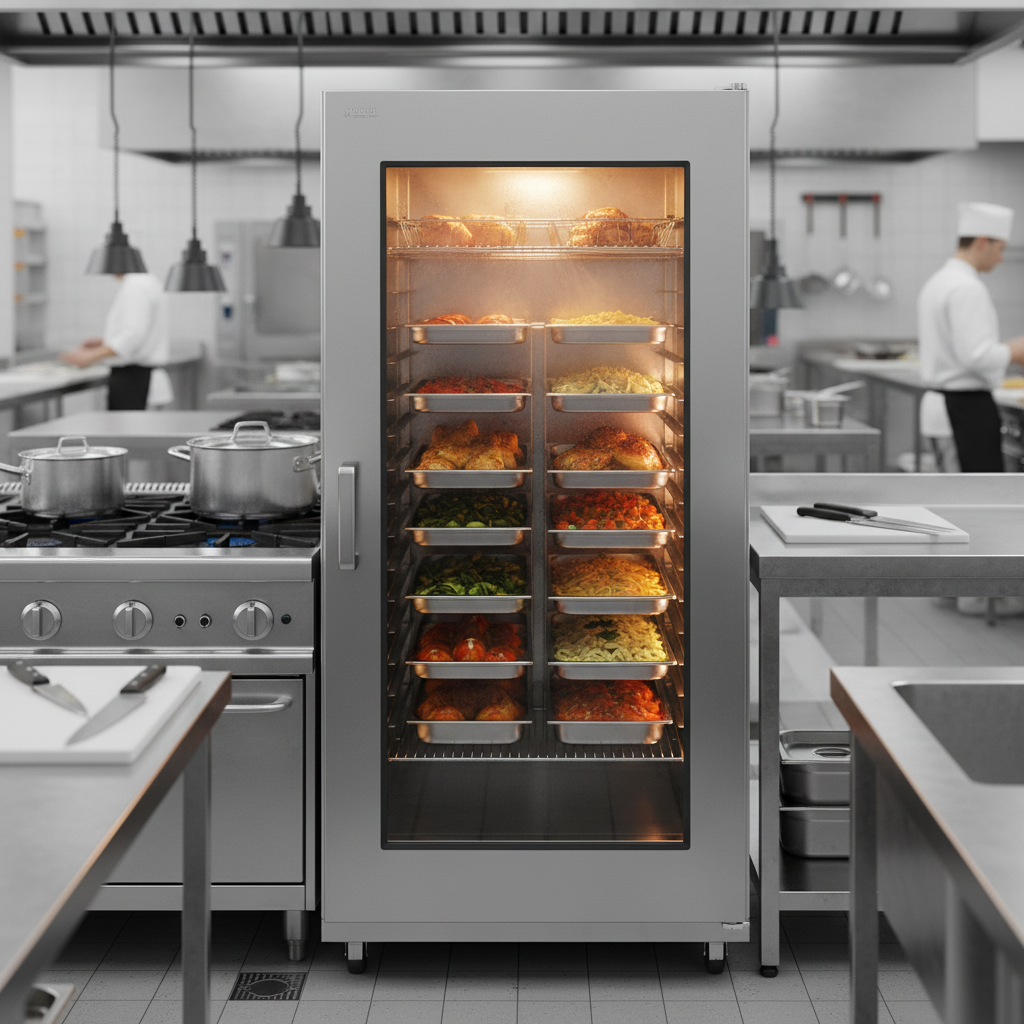
Full-height and half-height stainless steel holding cabinets, one on casters, in a commercial kitchen

Where they earn their keep

Applications

Anywhere food is cooked ahead of when it is served, a holding cabinet is the link between the kitchen and the pass. The bigger the gap between cooking and serving, the more the cabinet is doing.

Banquet service line staging plated meals held in commercial holding cabinets before service

Restaurants & Banquet Service

Plated meals and bulk pans held between the line and the pass, and banquet halls holding hundreds of covers at temperature until the room is ready to be served all at once.

Catering & Off-Site Events

Insulated mobile cabinets roll from the kitchen to the truck to the venue, holding food at safe temperature through transport and staging where there is no full kitchen on site.

Institutional Foodservice

Hospitals, schools, universities and other high-population kitchens batch-cook and then hold for tray line or cafeteria service on a fixed schedule.

Grocery & Deli Hot Food

Hot delis, rotisserie programs and prepared-food cases hold cooked product at safe temperature through the selling day without cooking to order.

Ghost Kitchens & Delivery Staging

Orders cooked ahead and held hot while drivers arrive, keeping delivery food at temperature during the wait without over-holding it to death.

Concessions & High-Volume Venues

Stadiums, arenas and fairs pre-cook and hold large volumes so crews can serve crowds fast at peak without a kitchen behind every stand.

Specifying a cabinet

Choosing a holding cabinet

Two cabinet quotes are only comparable when they describe the same machine. These are the decisions that define what you are actually buying, and the trap that comes with each one. No brand rankings here, just the questions to answer before you sign off.

Chef comparing commercial holding cabinet options in a stainless steel kitchen
Key holding cabinet specifications, what each one governs, and what to watch for
DecisionWhat it governsWhat to watch for
Capacity (pan count)How much the cabinet holds, in sheet or steam-table pans, and whether it is full-size or half-size.Size to your peak volume. An empty cabinet wastes energy heating air; an overfull one blocks the airflow that keeps temperature even.
Heated vs humidifiedWhether the cabinet holds with dry heat only or adds moisture, and whether the humidity is adjustable.Match it to the menu. Crisp foods want dry heat, moist foods want humidity, and a mixed menu wants adjustable so one cabinet does both.
Temperature range & recoveryThe setpoint band the cabinet can hold, and how fast it returns to temperature after the door opens.Recovery matters most in busy service. A slow-recovering cabinet sags below safe temperature during a rush of door openings.
Insulated vs non-insulatedWhether the shell is insulated, which drives temperature stability, recovery, running cost and exterior heat.Insulated holds steadier, recovers faster, runs cheaper and stays cooler to touch. Non-insulated is cheaper up front but works the element harder.
Mobile vs stationaryWhether the unit rides on casters to be moved and transported, or is installed in a fixed position.For mobile use, check caster quality and brakes and a cord and plug rated for the moves you will actually make, not just occasional repositioning.
Controls (analog vs digital)How you set and monitor temperature and humidity: a simple thermostat dial or a digital readout with timers.Digital gives repeatable holds and easier HACCP logging. Analog is simpler and cheaper but leaves more to the operator to judge and record.
Door typeSolid vs clear (glass) doors, and single full-height vs Dutch (split half) doors.Clear doors let staff check product without opening. Dutch doors cut heat loss by opening only half the cabinet at a time during service.
Footprint & voltageThe floor space the cabinet needs and the electrical supply it draws: 120V vs 208/240V and the circuit amperage.Confirm the circuit before you buy. A cabinet on the wrong voltage or an undersized breaker either trips or never reaches holding temperature.

Capacities, temperature ranges, humidity control and electrical requirements vary between manufacturers and models. Work from the supplier's specification sheet and your local health code for the exact cabinet being quoted rather than from generic figures.

Common questions

Holding cabinet FAQ

What is the difference between a holding cabinet and a warming drawer?

A holding cabinet is a full enclosure, often a full-height or half-height insulated box holding many sheet or steam-table pans, built to keep large quantities of already-cooked food at a safe serving temperature for hours. A warming drawer is a small under-counter unit for a few plates or pans, with limited capacity and usually simpler humidity control. If you are holding a banquet's worth of food or staging orders through a rush, you want a cabinet; a drawer is for a couple of trays behind the line.

What temperature should a holding cabinet hold food at?

Cooked food that will be held hot has to stay above the food-safety danger zone. In the United States the FDA Food Code sets a hot-holding minimum of 135°F (57°C), and many operators run cabinets a little higher, around 140°F to 165°F (60°C to 74°C), to keep a safety margin as doors open and product cools. The right target depends on the food and your local health code, so set the cabinet from your HACCP plan rather than from a default number.

Do I need a humidified holding cabinet, or is dry heat enough?

It depends on the food. Dry-heat holding keeps crisp items like fried food and roasted items with crackling from going soggy, but it will dry out and skin over roasts, vegetables, rice and plated meals over a long hold. Humidified cabinets add moisture, from a water pan or injected steam, so those foods hold longer without drying, at the cost of softening crisp textures. Many cabinets let you dial humidity up or down, which is the flexible choice for a mixed menu.

How long can I hold food in a holding cabinet?

A cabinet holds food at a safe temperature; it does not stop quality from slowly declining. Properly humidified, many foods hold acceptably for a few hours, while dry or delicate items degrade faster. Food safety and food quality are two separate clocks: your health code limits how long food may be held hot and usually requires temperature logging, while your own standards decide when quality has dropped too far to serve. Follow your HACCP plan for the hard limits.

Are insulated holding cabinets worth the extra cost over non-insulated?

For most operations, yes. Insulated cabinets hold temperature more evenly, recover faster after the door opens, draw less energy to stay at setpoint, and keep their exterior cooler and safer to touch in a tight kitchen. Non-insulated cabinets cost less up front and can make sense for short holds in a climate-controlled space or lighter-duty use, but they work the heating element harder and lose heat quickly every time the door opens.

What is the difference between a full-size and a half-size holding cabinet?

It comes down to capacity and footprint. A full-height cabinet holds a full rack of pans, commonly around fifteen to twenty-plus sheet or steam-table pans, and stands close to floor-to-ceiling. A half-size or half-height cabinet holds roughly half that and fits under a counter or into a tight line. Match the size to your peak volume and the space you have: an oversized cabinet wastes energy holding empty air, and an undersized one becomes a bottleneck during service.

Can a holding cabinet cook food?

A standard holding cabinet only holds; it is not built to bring cold food safely up to temperature. A cook-and-hold cabinet is different: it cooks at a low temperature, which suits slow-roasting large cuts overnight, then automatically drops to a holding temperature so the same unit finishes the cook and holds until service. If you want one box to roast and hold, specify a cook-and-hold unit rather than a plain holding cabinet.

What is the difference between a holding cabinet and a proofing cabinet?

They control different conditions for different jobs. A holding cabinet keeps cooked food hot, typically 140°F (60°C) and above. A proofing cabinet keeps dough in a warm, humid, much lower-temperature environment, roughly 80°F to 110°F, so yeast can rise. Combination proofer-and-holding cabinets and retarder-proofers exist that switch between modes, but a plain hot-holding cabinet runs far too hot to proof dough.

Contact

Get a Quote

Send the basics of what you need and we will point you in the right direction: how much you have to hold, whether the food wants dry heat or humidity, the temperature range, and whether the cabinet needs to be mobile.

Sizing a cabinet

Working out capacity, full or half height, and mobile vs stationary from your volume and your space.

Heat vs humidity

Deciding whether dry heat, humidified, or adjustable holding fits the food you actually serve.

Specifying power

Voltage, amperage and footprint so the unit fits your line and your electrical supply.

We use what you submit to respond to your enquiry, which can include sharing it with suppliers who can quote your request. We never sell your information. See our privacy notice.